
AI Agents act on what they read. Control what they can read.
Rovo, Claude, ChatGPT and Cursor read Jira and Confluence through Atlassian's MCP server. Content Retention Manager expires, archives, holds and deletes on policy, so agents work from current content while you stay audit-ready with an immutable log of every removal.

What goes wrong when agents read everything
The fix sits at the source: decide what is still there to read.
Two outcomes from one policy
- Regulatory assurance: Automate and meet ISO/SOC2 expectations with audit‑ready logs and defensible deletion.
- Agent accuracy: Agents and MCP clients read only current, approved content, so answers and actions come from what is still true.
- Risk reduction: Shrink discovery scopes and breach surface areas by eliminating expired/ownerless content.
- Cost efficiency: Fewer stale pages means fewer tokens spent on outdated content, and less storage and backup to carry.
- Operational performance: Improve Confluence and Jira responsiveness and shorten maintenance windows.
How Content Retention Manager solves it
Retention that keeps agents accurate and your audit clean. Opus Guard's Content Retention Manager enforces policy at the source, so every connector sees the same cleaned-up content.

Automate retention policies
Define time- and event-based rules for spaces and projects. Expired content leaves what every agent and MCP client can read, with archive-before-delete if required.
Delegate governance
Set up any number of groups of trained content admins, and content owners who know the content best to make retention decisions, and perform reviews or holds before any actual deletion of content.
Discover, audit, classify, report
Immutable, exportable proof of deletion & policy alignment for any examiners – legal or audit.
Control → Practice in Atlassian source → Opus Guard feature → Export evidence for audit‑ready reviews.

Control what AI agents can read
Clear away outdated content at the source so Rovo, Claude, ChatGPT and Cursor stay accurate and trustworthy, including through the Rovo MCP server.
Classification blueprints aligned to ISO/SOC/privacy frameworks
Limitless array of hierarchical content classification types and retention policies.
Built for AI governance
SOC 2, ISO 27001 & ISO 42001 (AI governance)alignment for dataset lineage, minimization, and exportable evidence trails.
Least-privilege principles
Scoped to Confluence & Jira permissions with auditable access, no off‑platform data stores.
Content Retention Manager walkthrough
FAQ's
How does data retention reduce risk during ISO / SOC 2 audits?
Can we prove that expired content was deleted in accordance with policy?
How does retention affect agents and MCP clients?
Does retention reduce what agents cost to run?
How does Opus Guard fit in our existing information governance program?
Which fields are included in exports for reviews and audits?
Does this help Rovo, Claude, ChatGPT and Cursor?
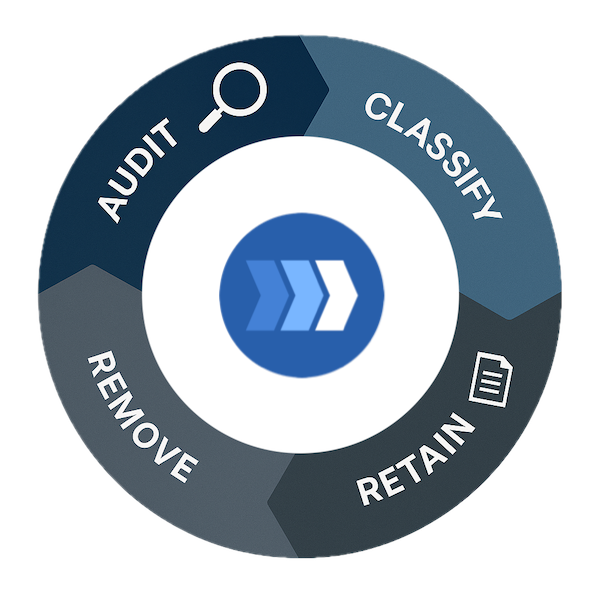
Governance that keeps pace with your agents
Content Retention Manager is your vital tool to oversee and execute the document lifecycle, ensuring that information is stored, maintained, and disposed of in a compliant focused manner and according to your defined retention policies.
"Love it. I've always wondered why this wasn't a feature in Confluence and now I found a way to get it!"
Opus Guard is your trusted retention partner
Opus Guard is SOC 2 Type II certified. And built entirely on Atlassian's own SOC 2 certified infrastructure. We regularly conduct tests and audits, subject to our controls.

Runs on Atlassian is a special category of apps in the Atlassian Marketplace that are built on Atlassian Forge. These apps • Are hosted on Atlassian’s platform • Store data within Atlassian • Are data residency compliant

Atlassian Cloud Fortified apps offer additional security, reliability, and support through: • Cloud security participation • Timely reliability checks • 24hr support response time, and more: verified by Atlassian
Data Residency & Privacy
Supports Atlassian data residency. Aligns to GDPR/CCPA principles of data minimization and storage limitation—no off-platform copies.
Defensible Deletion & Evidence
Policy-driven archival and deletion with exportable audit logs for regulatory reviews.
Least-Privilege by Design
Scopes limited to the minimum required to classify, audit, archive, and delete in Confluence & Jira.
ISO Alignment
Governance aligned with ISO 27001 (information security) and ISO 42001 (AI governance) practices.
Agents are only as good as the content they read
Perspectives from Opus Guard on retention, AI accuracy and the governance foundations behind agent-ready Jira and Confluence.


Take Control of Your Data Today
Decide what your AI can read. Start free for up to 10 users, or get a 30-day trial for any team size.